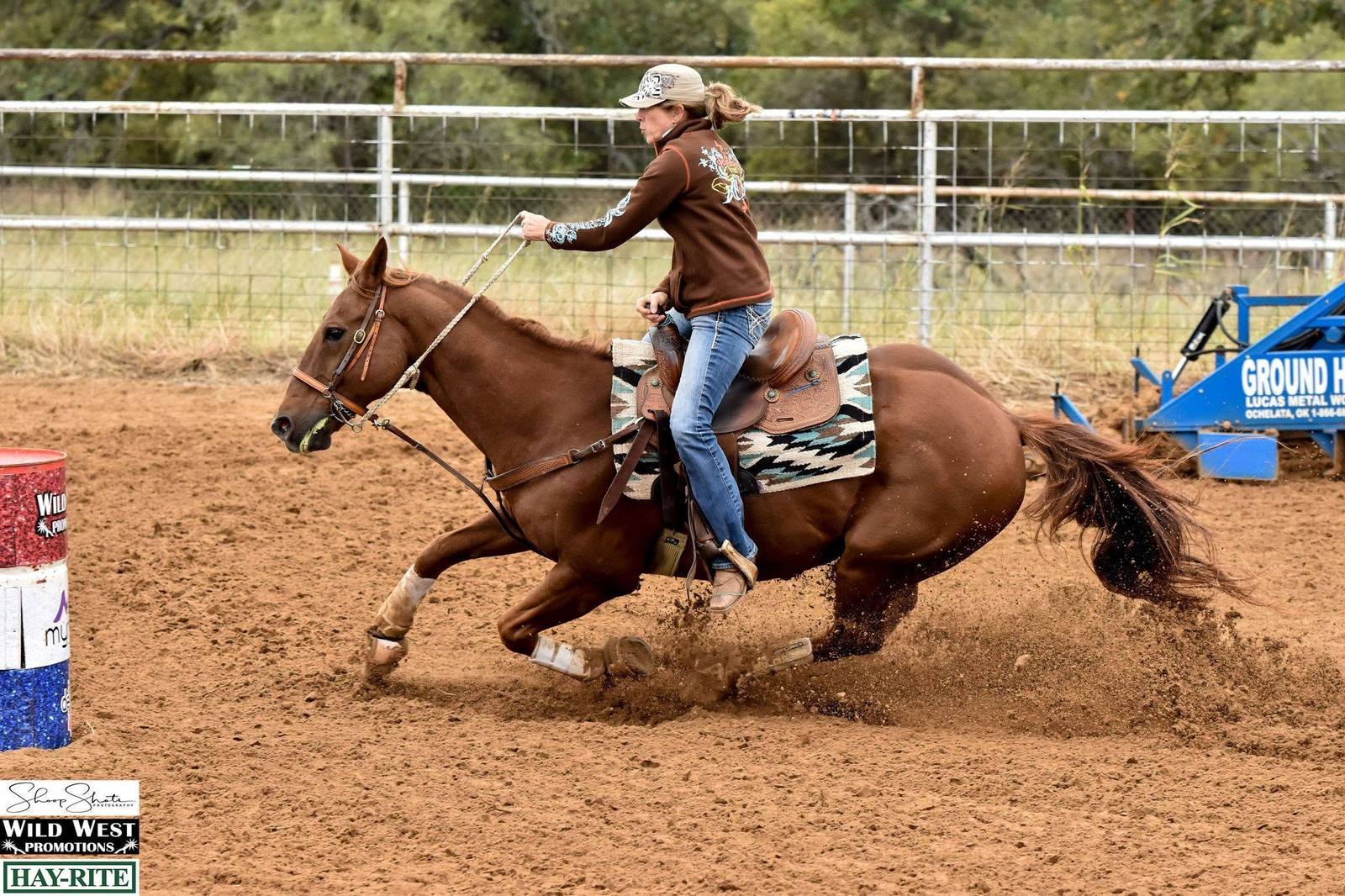
I’d like to introduce you to Lyle, registered name Tri War Leo, my barrel horse. Well, retired barrel horse. He’s now coming on twenty-seven, but the summer he was twenty-five, he came up lame for the first time. In his life. And that’s when I retired him from barrel racing.
It was a year early. That’s the part I still feel. We had a plan for how this ended, and this wasn’t it.
What twenty-five sound years is and isn’t
Some of that is luck. I want to say that plainly, because the tidy version of this story is that good management produced a sound horse, and that isn’t how it works. Horses come up lame in excellent care. They come up lame doing nothing at all, in a field, on a Tuesday.
What the years of work buy you isn’t immunity. It’s odds, and it’s what the first bad day looks like when it comes. Twenty-five years in, one lameness, caught early, in a horse with nothing else accumulated underneath it. That’s a very different situation than the same injury on a horse who has been compensating for three other things nobody addressed.
The foundation didn’t prevent the bad day. It determined what the bad day cost.
I could have kept going
I could have rehabbed him. Plenty of people would have. He’d have come back, and we could have competed for fun.
I didn’t, for two reasons.
At his age, an injury isn’t an event you recover from and put behind you. It’s a new baseline. Whatever comes next happens on top of it, for the rest of his life. When you’re young you can afford to find out how much you can take, because there’s time to be wrong. That math changes. At some point the downside stops being a setback and becomes permanent, and the whole calculation moves with it.
And we were either in it to win, or we were doing something else. We are both too competitive to compete for fun. That’s not me projecting onto a horse. Anyone who has watched Lyle work knows exactly how much he wants to win. Taking him back into a pen to do a slower, smaller version of the thing he was great at wouldn’t have been kind. It would have been the two of us pretending.
So we do something else now. Connection: to each other, to the other horses, to being outside. It isn’t a lesser version of barrel racing. It’s a different thing, chosen on purpose.
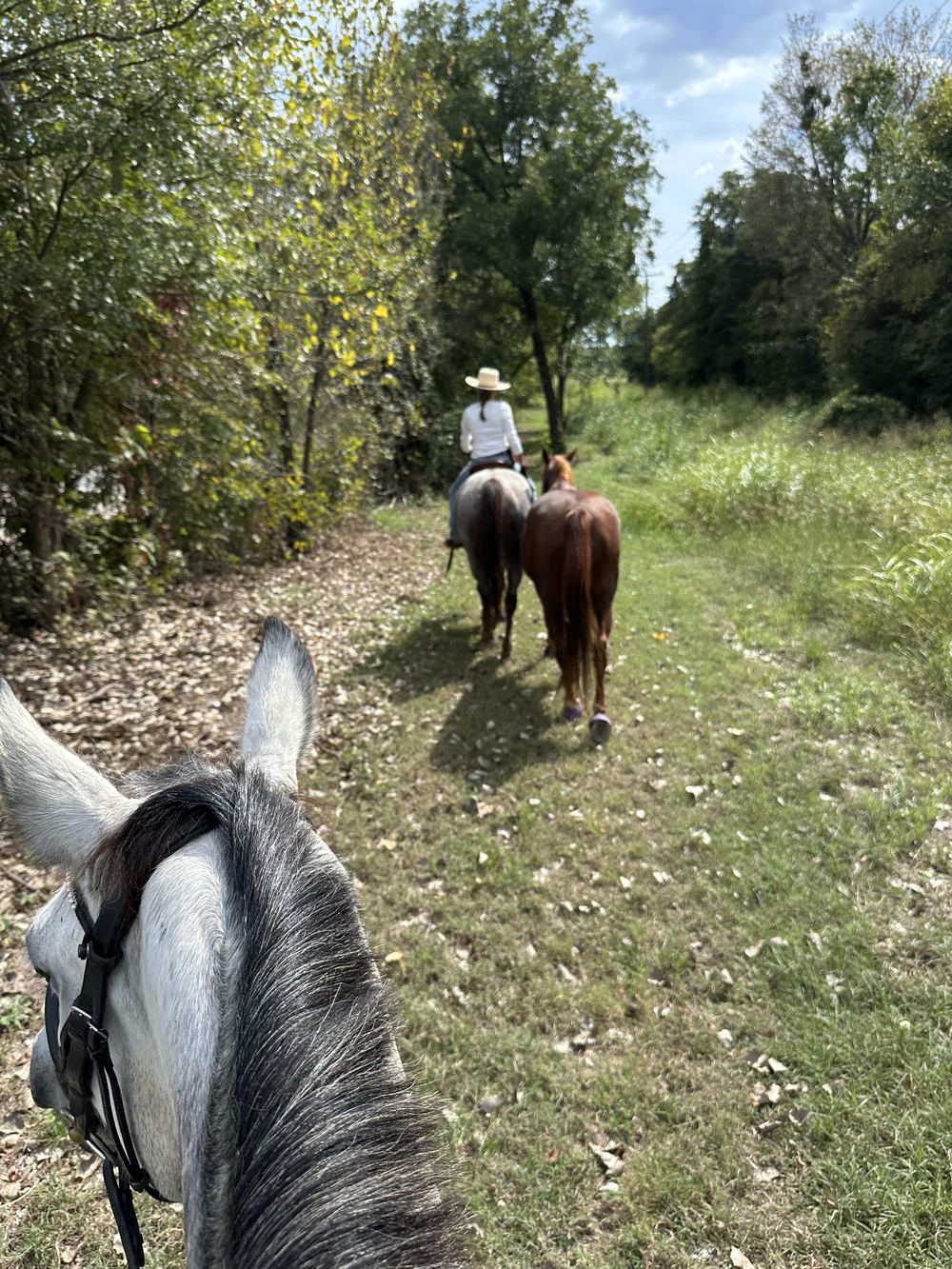
He still goes out with us. Some days I pony him alongside, some days I ride him. What I retired was the competing, not the horse.
The version of this I see in companies
Almost nobody retires anything.
What happens instead is the diminished version. The campaign that used to work still runs, at lower volume, with less behind it. The newsletter still goes out. The category position that was sharp five years ago is still on the site, a little softer with each rewrite. Nobody decided to keep doing any of it at seventy percent. It just never stopped.
AI has made that much easier to do and much harder to notice. When producing the work was expensive, the diminished version eventually collapsed under its own cost, and somebody had to make a decision. Now the cost of continuing has dropped close to zero. You can keep a strategy on life support indefinitely, generating enough output to look alive, without anyone ever having to say out loud that you are no longer in it to win.
That’s the part that concerns me. Not that AI will produce bad work. That it will let organizations avoid the decision to stop, more or less forever, by making the diminished version cheap enough to sustain.
The louder version
There’s a second failure mode, and it isn’t drift. It’s the opposite.
Donald Sull named it active inertia in 1999: when the ground shifts, companies don’t freeze. They accelerate. They respond to a changed market by doing more of exactly what used to work, harder and faster than before. Strategic frames become blinders. Processes harden into routines. Relationships become shackles. Values harden into dogmas. His case was Firestone, which didn’t fail to act — it acted decisively, in the direction it already knew.
Nobody in that story is neglecting anything. They’re working. That’s what makes it hard to see from the inside, and what makes “we’re being proactive about AI” such a poor defense.
Because this is the part AI changes. Active inertia used to be expensive. Doing more of the old thing meant more people, more budget, more time, and the cost eventually forced a conversation. Now a company can press the accelerator on a strategy that stopped working two years ago and barely feel it in the P&L.
Drift and active inertia look like opposites. They arrive at the same place. In both, the decision never gets made.
Stopping early is the hard one
“Know when to quit” is a greeting card. What I actually did was harder and less satisfying than that, and I don’t want to dress it up.
The decision came a year before I wanted it. I didn’t get to choose the timing, and choosing the response was not a relief. It was the right call and it was awful, and both of those are still true.
That’s the part companies get wrong. The stop that shows up on schedule, at the natural end of something, barely requires a decision. The one that matters arrives early, while the thing is still working well enough to defend, and while everyone involved still wants it. That’s when you need someone with the standing to say we’re not doing the diminished version, and a plan for what you do instead.
Three questions
What are you still doing at seventy percent that nobody ever decided to keep doing?
Where has AI made it cheap enough to continue something that would otherwise have forced a decision by now?
If you’re not in it to win in a given channel or category, what would you do instead, on purpose? Not nothing. Something else.
That last one is the whole thing. Stopping only works when it’s a choice about what comes next.
And stopping a program rarely means losing what it built. The audience, the relationships, the expertise you developed running it — those go with you. What ends is the work that was costing you.
The Alignment Score measures whether your marketing foundation is strong enough to survive being amplified. Six dimensions, twenty-four questions, about eight minutes: veronicamarkol.com/alignment-score
Source: Donald N. Sull, “Why Good Companies Go Bad,” Harvard Business Review, July–August 1999, pp. 42–48, 50, 52.
← All posts