Recently I spoke with a prospect who was skeptical — not about whether AI is real or powerful, but about whether it’s actually useful in a real business.
His surprise was how much human intervention it still takes. That it needs to be prompted, corrected, reviewed, trained. That it doesn’t just do the thing.
I get it. We’ve been sold a magic box: type a prompt, get genius-level results, automate everything, rest easy. The reality is messier, and more human.
Where the confusion starts
Most of it comes from how AI is marketed. “AI will replace your marketing team.” “ChatGPT writes better than you.” “Auto-pilot your content creation.” Those headlines get clicks, and they create false expectations for leaders trying to understand what these tools actually do.
AI isn’t plug-and-play. It doesn’t arrive preloaded with your brand strategy, your values, or judgment. It needs input, context, boundaries, and feedback. When people see behind the scenes of a working AI workflow, they’re surprised how much human work is still involved.
That’s not a flaw. That’s the feature.
What it actually is
A large language model isn’t thinking. It’s predicting — analyzing patterns across enormous datasets and generating output based on them. It’s a very fast, very confident intern who has read everything and understands structure, but has no context, no values, and no lived experience.
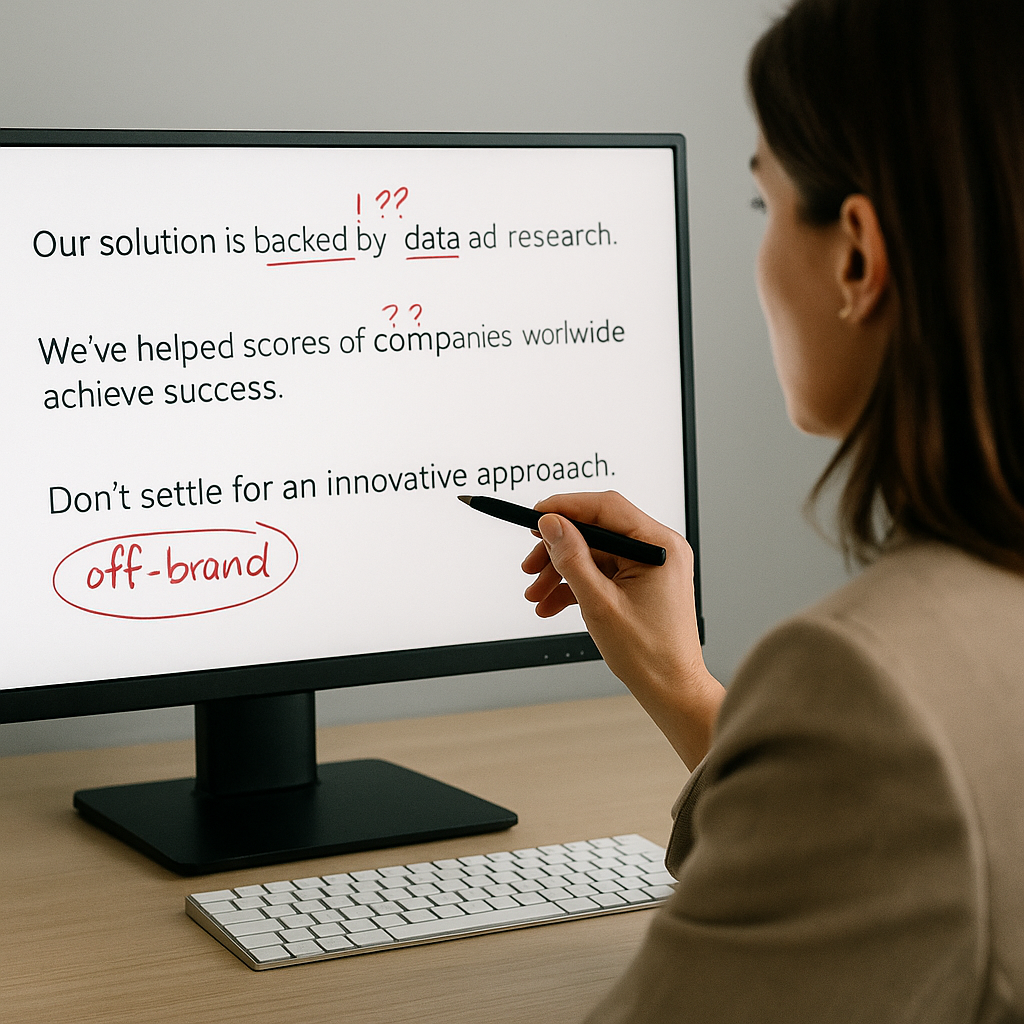
So when leaders expect it to behave like a team member or a strategist, they get frustrated. It got the tone wrong. It made up a source. This doesn’t sound like us.
Of course it doesn’t. It isn’t you until you make it you.
The dirty little secret
The best outputs don’t come from better prompts. They come from better people.
Behind every smart use of AI is someone doing the quiet, critical work: defining goals, setting ethical boundaries, training tone and voice, reviewing and correcting outputs, making the final call. That’s not inefficiency. That’s integrity.
AI is only as strong as the human feedback guiding it. Leave it unchecked in a brand, marketing, or customer-facing role and you don’t get faster. You get riskier.
A concrete case: content marketing
You want AI to help your team produce more, faster. Good. But who teaches it your voice? Who trains it on your positioning? Who catches a hallucinated statistic? Who decides what gets published?
If nobody’s watching, you end up with copy that sounds like ChatGPT rather than your brand, tone-deaf messages, repetition and plagiarism risk, and content that erodes trust instead of building it.
With the right oversight, you reduce bottlenecks, keep the team focused on strategy, and stay consistent and aligned.
Human at the Helm™ isn’t about resisting technology. It’s about refusing to surrender to it.
The best outputs aren’t automated. They’re mentored.
High-performing systems aren’t set-and-forget. They’re coached, corrected, tuned.
In a New York Times piece, an 81-year-old psychologist described using ChatGPT like an interactive journal. What made it useful wasn’t the tool — it was how he used it. He corrected its emotional misreads, fed it his tone, challenged its assumptions, asked it to reflect his voice. In return he got insights worth having. Not because it understood him, but because he had trained it to echo what mattered.
The AI didn’t get better. He made it better. That’s the difference.
Why this matters
We’re in an era where AI can publish at scale and one wrong output can erode years of trust. So who’s accountable? Who makes the call? Who says “that doesn’t feel right”?
You do. You set the guardrails. You ensure outputs align with brand and values. You bring curiosity, clarity, and context to the machine. You understand that intelligence isn’t the same thing as wisdom.
The competitive advantage is still human
Everyone has access to AI. What they don’t all have is critical thinking, leadership, taste, strategy, experience, and judgment.
AI will get faster, better, more fluent. It won’t get wiser. It won’t get more ethical. It won’t care about your customers, your people, or your mission.
That’s your job. That’s your advantage.
← All posts